

The Cycle of Inaction
How American Citizens Bear the Cost of Political Paralysis on Gun Violence

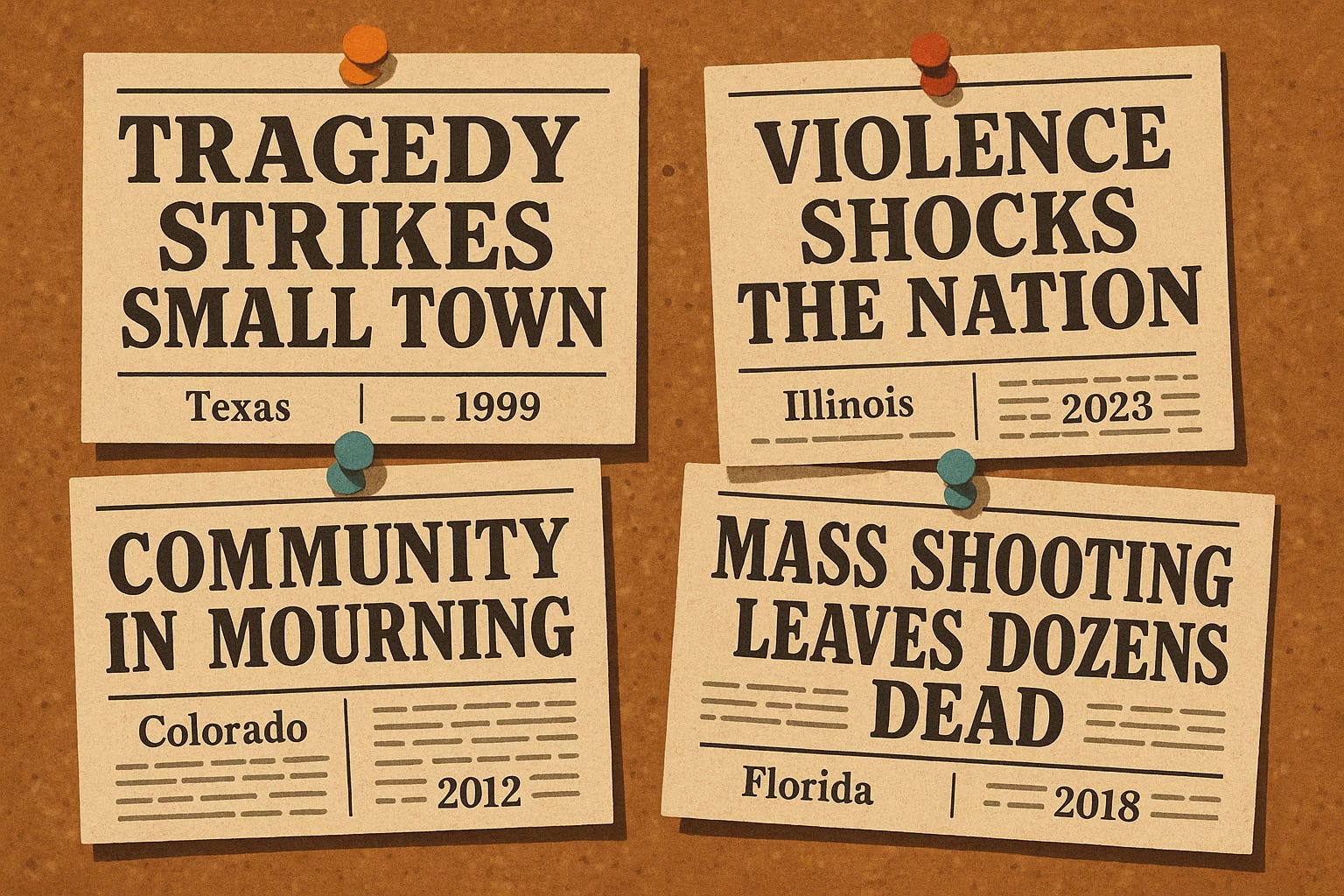
Mass shootings have become a tragically routine feature of American life, occurring with a frequency that would be incomprehensible in most other developed nations. Yet despite mounting public outcry and devastating human costs, the political response follows a predictable and deeply inadequate pattern: expressions of sympathy, heated rhetoric on all sides, and ultimately, legislative inaction. This cycle has left American citizens—particularly the most vulnerable among us—as unwitting sacrificial lambs in a political system that appears structurally incapable of addressing one of the nation's most pressing public safety crises.
The Grim Statistics
The numbers paint a stark picture. The United States experiences far more mass shooting events than any other developed country, with incidents occurring multiple times per week according to various tracking organizations. Beyond the headline-grabbing tragedies that capture national attention, thousands of Americans die annually from gun violence in incidents that barely register in the national consciousness. Each statistic represents not just a life lost, but families shattered, communities traumatized, and a society gradually numbed to preventable tragedy.
What makes this particularly troubling is that these casualties occur against a backdrop of apparent public consensus on certain policy measures. Polling consistently shows that significant majorities of Americans, including gun owners, support common-sense reforms like universal background checks, extreme risk protection orders, and safe storage requirements. Yet these broadly popular measures repeatedly fail to become law, highlighting a profound disconnect between public will and political action.
The Ritual of "Thoughts and Prayers"
In the immediate aftermath of each mass shooting, the American political response has become ritualized to the point of parody. Politicians across the political spectrum offer their "thoughts and prayers" to victims and families—a phrase that has become so synonymous with inaction that it now often provokes more cynicism than comfort. These expressions of sympathy, while perhaps well-intentioned, serve as a substitute for substantive policy discussions rather than a precursor to them.
This performative response serves multiple political functions. For politicians who oppose gun regulations, it allows them to appear compassionate while avoiding any commitment to policy changes. For those who support reforms, it provides a safe initial response before potentially more controversial policy proposals. Meanwhile, the news cycle moves on, public attention wanes, and the underlying conditions that enabled the tragedy remain unchanged.
The "thoughts and prayers" phenomenon represents something deeper than mere political calculation—it reflects a system where symbolic gestures have largely replaced substantive governance on contentious issues. Citizens are left with the hollow comfort of political sympathy while remaining exposed to the same risks that claimed previous victims.
Structural Barriers to Action
The persistence of this cycle cannot be attributed solely to individual politicians' moral failings or lack of empathy. Rather, it reflects structural features of the American political system that make comprehensive action on gun violence extraordinarily difficult, even when such action enjoys broad public support.
The influence of organized interest groups, particularly those opposing gun regulations, creates powerful incentives for maintaining the status quo. These groups have developed sophisticated strategies for mobilizing opposition to proposed reforms, often framing any new restrictions as threats to constitutional rights or steps toward broader confiscation. The intensity of opposition often outweighs the broader but less organized support for reform measures.
Geographic representation also plays a crucial role. The Senate's structure gives disproportionate influence to rural states where opposition to gun regulations tends to be strongest, while urban areas that bear the brunt of gun violence have relatively less influence in that chamber. This creates a situation where the communities most affected by the problem have the least power to address it through the legislative process.
Primary election dynamics further complicate the picture. In many districts, politicians face greater electoral risk from appearing too accommodating on gun issues than from maintaining rigid positions, even when those positions conflict with broader public opinion. This encourages politicians to play to their partisan bases rather than seek compromise solutions.
The Human Cost of Political Failure
While politicians engage in familiar debates and offer familiar responses, American citizens continue to pay the price for this collective failure. Parents send children to schools that increasingly resemble security installations, complete with armed guards, metal detectors, and active shooter drills that traumatize young people even as they prepare them for potential violence. Workers in offices, shoppers in malls, and worshippers in churches all live with a low-level awareness that they could become victims of mass violence at any moment.
The psychological toll extends far beyond direct victims and their families. Communities that experience mass shootings often struggle with collective trauma for years afterward. Even those who never directly experience gun violence live in a society where such violence is common enough to influence daily decisions about where to go, what events to attend, and how to protect loved ones.
Perhaps most tragically, this cycle of violence and inaction has created a generation of young Americans who have never known a time when mass shootings were not a regular feature of national life. Students who have grown up practicing lockdown drills alongside fire drills have been conditioned to accept as normal a level of violence that would shock previous generations. This normalization of the abnormal represents a profound failure of the social contract between government and citizens.
International Perspectives
The contrast with other developed nations is instructive. Countries like Australia, New Zealand, and the United Kingdom have all experienced mass shooting events that prompted swift, comprehensive legislative responses. These nations demonstrate that democratic societies can indeed act decisively on gun violence when political will exists, often with public support remaining strong years after implementation.
The American exceptionalism on this issue is not a source of pride but of international bewilderment. Foreign observers often struggle to understand how a nation capable of remarkable achievements in science, technology, and democratic governance appears so helpless in the face of preventable mass casualties. This damages American credibility when attempting to lead on other global issues and suggests a political system that has become dysfunctional in crucial ways.
Beyond the False Choices
Much of the American gun debate has been framed in terms of false choices that make compromise more difficult. Politicians and advocates often present the issue as a binary choice between unlimited gun rights and complete disarmament, when the reality is that most proposed reforms would leave the vast majority of current gun ownership unchanged while potentially preventing some tragedies.
This false framing serves the interests of those who benefit from the status quo but ill-serves the American people, who consistently indicate in polling that they want reasonable measures to reduce gun violence without eliminating gun ownership. The space between these extremes is where most Americans actually live, but it is precisely this middle ground that the political system seems least capable of occupying.
Citizens deserve better than to be trapped between these artificial extremes. They deserve a political class willing to acknowledge that constitutional rights and public safety concerns can be balanced, that evidence-based policies can be implemented without trampling on legitimate interests, and that the perfect need not be the enemy of the good when lives hang in the balance.
The Path Forward
Breaking this destructive cycle will require more than just different politicians or better intentions. It demands a fundamental shift in how the American political system approaches contentious issues that affect public safety. This might involve structural reforms to reduce the influence of special interests, changes to electoral systems that reward compromise over polarization, or new mechanisms for translating broad public support into legislative action.
Citizens also bear responsibility for demanding better from their representatives. Rather than accepting ritual responses to mass tragedies, voters must insist on substantive policy discussions and hold politicians accountable for their failure to act. This requires sustained engagement beyond the immediate aftermath of tragedies, when public attention is focused and political pressure is greatest.
The goal is not to eliminate all gun violence—an impossible task in any society—but to reduce it to levels that do not require citizens to live in constant fear or to accept routine mass casualties as the price of freedom. Other democratic societies have achieved this balance, and American ingenuity and democratic traditions should be capable of finding distinctly American solutions to this American problem.
Conclusion
American citizens have become unwitting casualties not just of gun violence itself, but of a political system that has proven incapable of responding effectively to clear and present dangers to public safety. The ritual of thoughts and prayers, while not inherently meaningless, has become a substitute for the hard work of democratic governance rather than a complement to it.
The human cost of this political failure cannot be measured only in terms of direct casualties, though those numbers are staggering enough. It must also account for the psychological trauma inflicted on communities, the erosion of public trust in democratic institutions, and the normalization of violence that should be shocking in a civilized society.
Breaking this cycle will require political courage, structural reforms, and sustained citizen engagement. Most importantly, it will require acknowledging that the current system has failed American citizens and that continuing to offer symbolic gestures in place of substantive action is no longer tenable. The alternative is to continue sacrificing innocent lives on the altar of political convenience, a price that no democratic society should be willing to pay.